

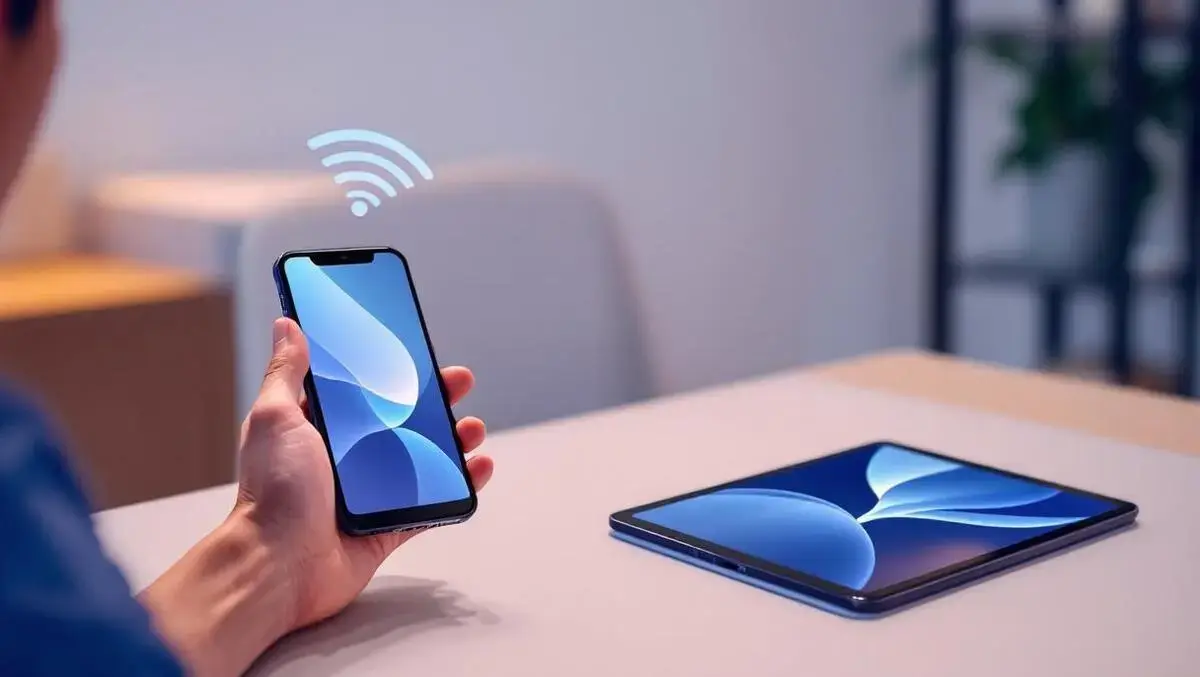

Samsung has introduced AirDrop compatibility to its latest Galaxy S26 smartphones, marking a notable change in how file sharing works between rival mobile ecosystems. The update allows Galaxy users to send files directly to nearby Apple devices through Quick Share, a feature long positioned as Android's equivalent to AirDrop.
The move does not mean Samsung has acquired Apple's technology. Instead, it reflects a broader shift towards interoperability, driven by a mix of user demand, competitive pressure and regulatory scrutiny. It also highlights how a once tightly controlled feature is becoming part of a more open, if still managed, cross-platform experience.
Early divide
When Apple introduced AirDrop in 2011 on Mac computers, it positioned the feature as a simple way to transfer files locally without cables or internet connections. The technology later expanded to iPhone and iPad, becoming a central part of Apple's device ecosystem.
AirDrop's appeal lay in its simplicity. Users could discover nearby devices automatically and send files with minimal setup. It relied on Bluetooth for discovery and a direct Wi-Fi connection for transfer, avoiding cloud services and preserving file quality.
The feature also reinforced Apple's ecosystem strategy. AirDrop worked only within Apple devices, which encouraged users to remain within the company's product range. For many, this became a daily convenience that competitors struggled to match.
Android response
Android manufacturers responded in fragmented ways. Early attempts at local file sharing varied across brands and often lacked consistency.
Samsung introduced Quick Share in 2020 as its own solution. It allowed Galaxy devices to exchange files quickly and added options to generate shareable links when direct transfer was not possible.
At the same time, Google developed Nearby Share as a system-level feature for Android. This aimed to provide a unified experience across different manufacturers.
By 2024, Samsung and Google merged their efforts under the Quick Share name. The move created a single, standardised approach for Android devices, reducing duplication and confusion.
Despite these efforts, a key limitation remained. Android users could not easily share files with Apple devices without using third-party apps or cloud services.
New bridge
Samsung's latest update addresses that gap. Quick Share on the Galaxy S26 can now detect nearby Apple devices and initiate transfers using a workflow similar to AirDrop.
Users can select files, choose a nearby iPhone or Mac, and send them directly. The recipient must still have AirDrop enabled and set to accept files from nearby devices.
The feature is being rolled out in stages, starting in South Korea and expanding to other regions. It is enabled by default, though users can disable it if they prefer.
This approach suggests that the functionality is not a direct integration of Apple's proprietary system, but a compatibility layer that allows communication between two different protocols.
Technical path
AirDrop uses Apple's own networking approach, combining Bluetooth discovery with a proprietary peer-to-peer Wi-Fi system.
Quick Share, by contrast, typically relies on Bluetooth and Wi-Fi Direct, which are widely supported standards across Android devices.
Bridging these systems requires translation between protocols. It also requires alignment on security and authentication, as both platforms use encryption to protect transfers.
Early implementations of cross-platform sharing have relied on Apple's "Everyone" mode, which temporarily allows any nearby device to send files. This reflects the challenge of matching Apple's contact-based trust model with Android devices that are not part of the same identity system.
Regulatory role
Regulation has played a role in pushing interoperability. The European Union's Digital Markets Act requires large technology platforms to open certain features to third parties.
This includes access to hardware and software capabilities that were previously restricted. File sharing systems such as AirDrop fall within the scope of these discussions.
Regulators have proposed measures that would require Apple to allow third-party devices to interact with its services more directly. These measures include technical documentation and equal access to system features.
Apple has raised concerns about security and privacy. It argues that opening proprietary systems could increase risks for users.
The introduction of cross-platform sharing features by Android manufacturers suggests that some level of interoperability is already being achieved, whether through regulatory pressure or technical workarounds.
The impact
The immediate benefit is practical. Users can share high-quality files quickly, without compression or internet access.
This is particularly relevant for media such as photos and videos, where file size and quality matter.
The experience is not yet identical across platforms. Differences in settings, permissions and user interfaces remain.
There are also questions about how widely the feature will be adopted beyond Samsung's latest devices. Expansion to older models and other Android manufacturers will determine its broader impact.