

Quantum Design Oxford to build 20-30 Tesla magnets
Tue, 24th Mar 2026
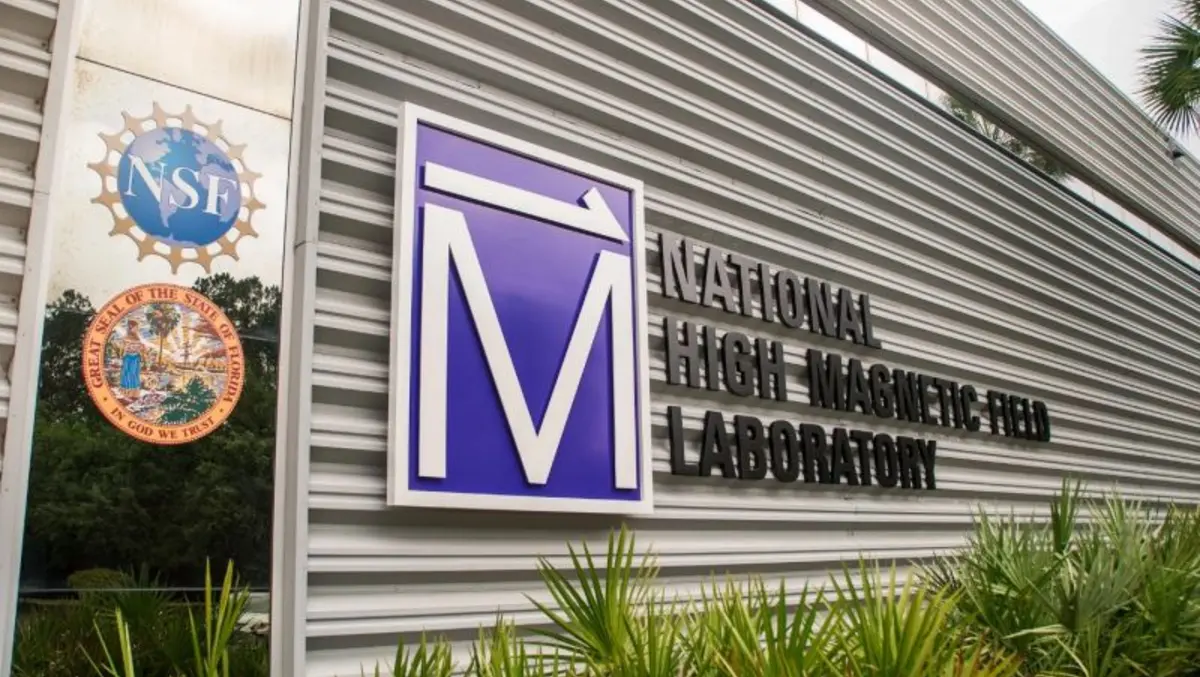
Quantum Design Oxford and the National High Magnetic Field Labouratory at Florida State University have partnered to develop compact superconducting laboratory magnets in the 20 to 30 Tesla range. The agreement focuses on shared intellectual property and product development.
The aim is to make magnetic fields above 20 Tesla more widely available in research settings, where access has largely been limited to specialist facilities. The project combines the Florida lab's work on high-temperature superconductors with Quantum Design Oxford's experience in designing and manufacturing laboratory magnets.
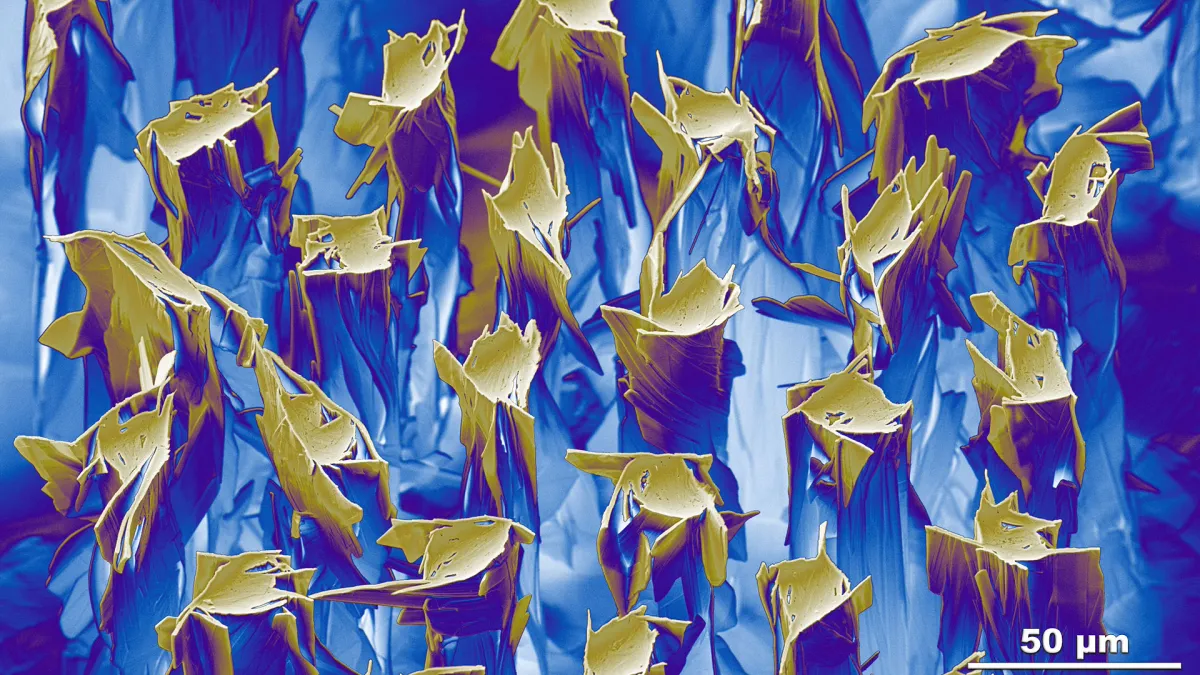
At the centre of the partnership is Bi-2212 high-temperature superconductor round wire, developed and deployed through research at the Applied Superconductivity Centre within the Florida State-based laboratory. Quantum Design Oxford plans to incorporate the wire into its existing line of compact superconducting magnet products.
The effort builds on a five-year programme previously completed by Quantum Design Oxford with Florida State University. That work contributed specialist integration knowledge that the company now plans to apply across a broader commercial product line.
Researchers often rely on large national laboratories for the highest magnetic fields because conventional superconducting systems become harder to scale as field strength rises. Recent advances in high-temperature superconductor wire have opened a path to smaller magnets that can carry very high currents without loss under extreme field conditions.
This is important for experiments in materials science and device physics, where strong magnetic fields and very low temperatures are used to study electronic and quantum behaviour. Systems in the 20 to 30 Tesla range help researchers probe new materials and observe effects that may not appear at lower field strengths.
Technical focus
The Florida team brings expertise in a high-pressure reaction technique it says is needed to achieve the current densities required for commercially viable high-field superconducting magnets. Pioneered at the Applied Superconductivity Centre, the method is intended to make Bi-2212 wire suitable for practical laboratory systems rather than only experimental use.
Quantum Design Oxford's role is to turn that materials and magnet research into instruments that can be integrated into measurement systems used by academic and industrial researchers. The company specialises in low-temperature measurement equipment and superconducting magnet systems, while the MagLab operates one of the leading magnetic field research centres in the US.
The National High Magnetic Field Labouratory is headquartered at Florida State University and also has sites at the University of Florida and Los Alamos National Labouratory. It hosts more than 1,000 researchers each year and is known for operating multiple record-setting magnet systems.
The partnership reflects a broader effort in the research equipment sector to move some high-field experiments from national user facilities into individual laboratories. If successful, magnets in this range could allow more institutions to carry out advanced work on quantum materials, semiconductors and superconductors without waiting for access to shared large-scale infrastructure.
Matthew Martin, managing director of Quantum Design Oxford, said: "Through this partnership with the MagLab, Quantum Design Oxford will enable researchers worldwide to conduct fast-ramp and high-precision experiments above 20 T in their own laboratories. Offering these as standard magnets integrated across our broad range of research measurement platforms is an exciting prospect."
Stuart Schoenmann, chief executive of Quantum Design, said the programme supports broader US research infrastructure and industrial priorities. "We are proud to partner with the National High Magnetic Field Labouratory on this important research and development program. This collaboration will help expand the United States' capability in high-field science, accelerate the discovery of new materials, and strengthen the infrastructure that underpins innovation in quantum technologies, advanced semiconductors, and superconductors. Working together with leading academic and national laboratory partners, we are helping to unlock new scientific understanding while building the capabilities and skills that will sustain U.S. technology leadership for decades to come."
Kathleen Amm, director of the National High Magnetic Field Labouratory at Florida State University, said the agreement is designed to move laboratory advances into wider use. "We're excited to be working with Quantum Design Oxford to combine their know-how with ours to realise the full application of our materials development. Working with Quantum Design Oxford ensures our breakthroughs in HTS material applications reach and benefit the global scientific community."
David Larbalestier, chief materials scientist at the MagLab and director of the Applied Superconductivity Centre, highlighted the wire processing behind the magnet design. "As pioneers in the development of the high-pressure reaction techniques necessary to achieve exceptional current densities, FSU and the ASC are uniquely placed to deliver the next generation of hybrid LTS (Nb3Sn and Nb-Ti) and HTS high-field research magnets in partnership with Quantum Design Oxford, empowering a new generation of scientists to explore realms that were previously out of reach."