


AMD has expanded its partnership with Microsoft to supply AI infrastructure for Azure, covering chips, networking and software across the cloud platform.
At the centre of the move is Microsoft's planned deployment of AMD Helios, a rack-scale system that combines AMD Instinct graphics processors, EPYC central processors, Pensando networking and ROCm software. The system will support frontier model inference, Azure AI services and customer workloads on Azure.
The companies are also extending their work on general cloud computing infrastructure. Microsoft will adopt AMD's 6th Gen EPYC "Venice" processors for two new Azure virtual machine series: Azure HDv2 and Azure HXv2.
Azure HDv2 is aimed at agentic AI workloads and data pipelines, while Azure HXv2 is intended for semiconductor design. The addition broadens Microsoft's use of AMD server processors across AI, engineering and data tasks in its cloud estate.
The announcement gives AMD a wider role inside one of the world's largest cloud operators as hyperscalers look for alternatives in AI infrastructure. It also shows Microsoft continuing to diversify the hardware underpinning Azure as demand grows for training, inference and related data workloads.
Alongside processors and graphics chips, the partnership extends to the networking layer. Microsoft is broadening its deployment of AMD Pensando data processing units in backend AI networking infrastructure and selected Azure services.
The two companies are also integrating AMD silicon with Azure Boost, Microsoft's in-house technology for cloud networking and storage offload. That work is intended to improve networking performance, efficiency and connection processing across Microsoft's cloud fleet.
Full stack
The scope of the agreement reflects a shift in AI infrastructure buying from individual chip purchases to broader platform decisions spanning compute, networking and software. Cloud providers increasingly need tightly integrated systems for large AI models, especially as inference workloads grow alongside training.
Helios brings together several elements of AMD's product line in one platform, including Instinct MI455X graphics processors, EPYC "Venice" central processors, Pensando networking and the ROCm software stack.
That matters for Microsoft because inference at scale depends not only on accelerator performance, but also on how effectively servers, memory, interconnects and networking work together. By adopting a rack-scale system rather than individual components alone, Azure can deploy a more unified architecture for AI services.
The partnership also expands access to AMD infrastructure for different types of Azure users. Frontier model developers will be able to use AMD-based systems to train and serve large AI models, while enterprise users will be able to run production AI workloads through Azure Foundry Managed Compute.
Cloud competition
The move comes as competition among cloud providers and chipmakers intensifies around AI computing capacity. Microsoft has invested heavily in specialised infrastructure for AI services, and suppliers are seeking a larger share of that spending by offering alternatives across accelerators, CPUs and networking.
For AMD, deeper placement in Azure strengthens its position in a market dominated by a small number of very large buyers. Broader deployment inside Microsoft gives the chip designer another reference point as it competes for AI and cloud workloads.
For Microsoft, the expanded relationship offers another supply path for AI systems as cloud groups seek to avoid over-reliance on any single vendor. Adding more AMD-based options in Azure virtual machines also gives customers more choice over the underlying processor for specific workloads.
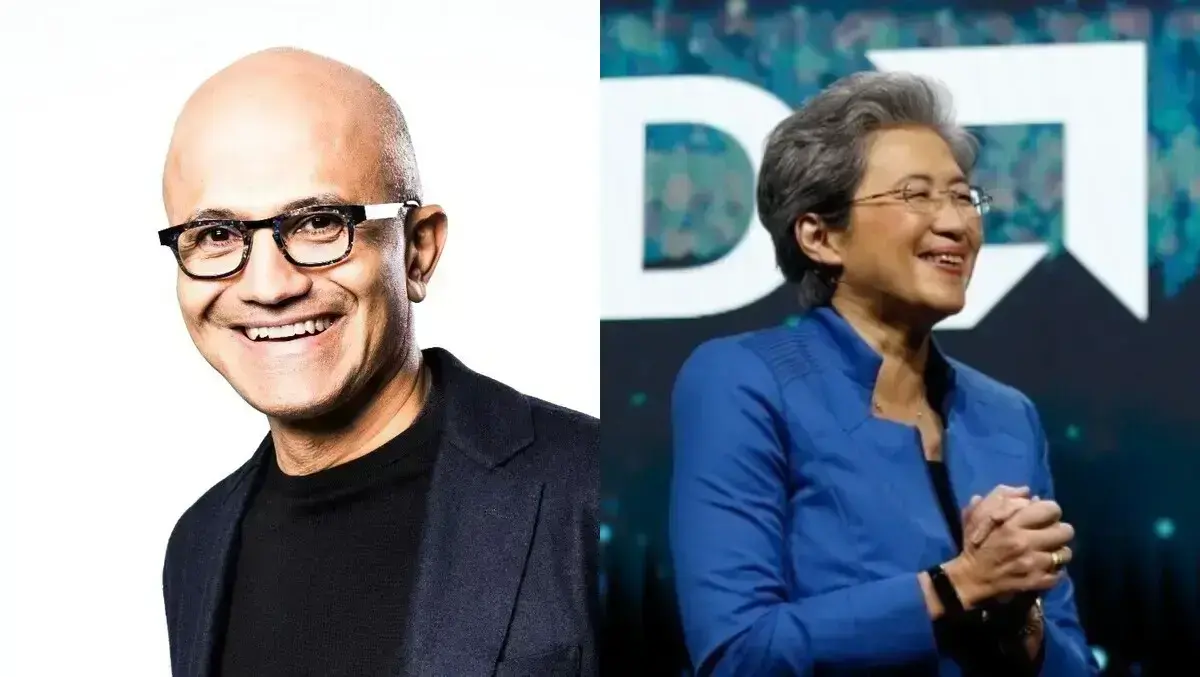
Dr Lisa Su, Chair and Chief Executive Officer, AMD, described the expansion as the latest step in a long-running effort that now spans a wider range of infrastructure.
"AMD and Microsoft have spent years building high-performance infrastructure together, and today we're extending that partnership across the full stack of AMD AI solutions on Azure," said Dr Lisa Su, Chair and CEO, AMD. "Microsoft's new AMD deployments mark an important milestone as we deliver leadership compute solutions to Azure customers and scale the next generation of AI infrastructure together."
Microsoft framed the arrangement as part of a broader effort to match different AI workloads with the right infrastructure.
"Customers are looking for AI infrastructure that is optimized for a wide range of workloads, from training and inference to data preparation, search, and reinforcement learning," said Satya Nadella, Chairman and CEO, Microsoft. "Through our collaboration with AMD, we are expanding the Azure infrastructure portfolio with AMD Helios to give customers the performance, scale and choice they need to build and run the next generation of AI applications."