

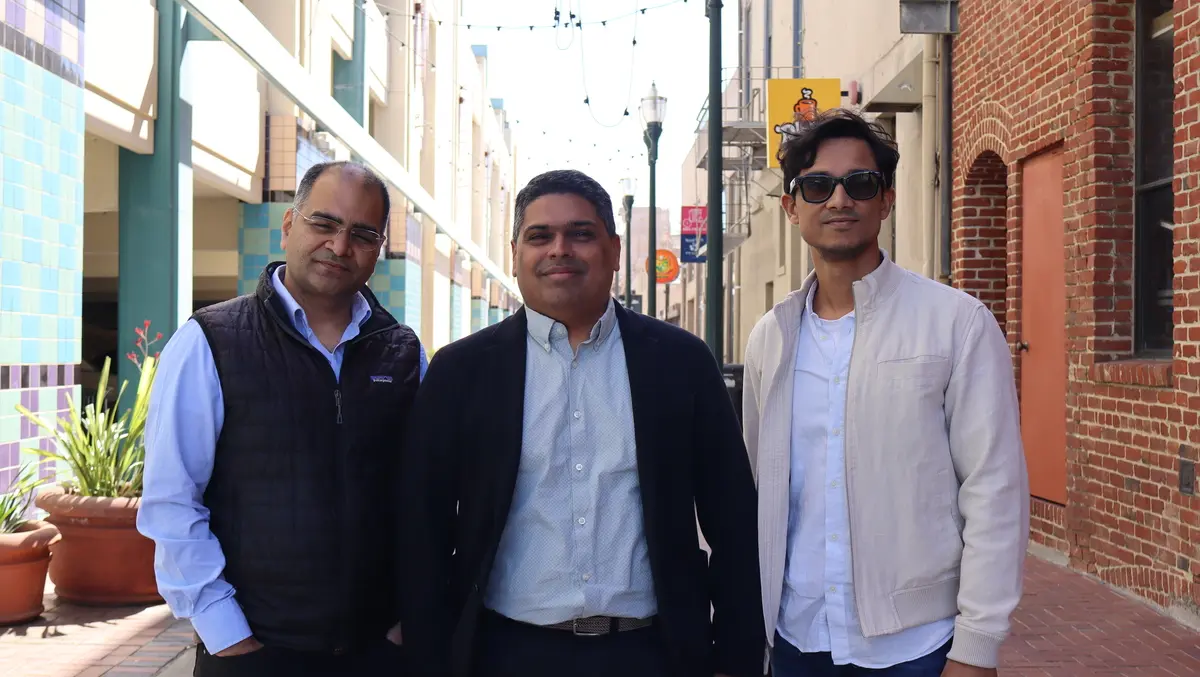
Autoheal raises USD $7.9 million for AI engineering platform
Mon, 28th Sep 2026 (Today).webp)
Autoheal has raised USD $7.9 million in seed funding in a round led by Innovation Endeavors.
The San Francisco startup sells a software platform that uses AI agents to handle post-coding engineering work, including incident response, vulnerability remediation, and software cost management, within a customer's own cloud environment.
Other investors included Emergent Ventures, U&I Ventures, Darkmode Ventures, Batch Ventures, and Param Hansa Values. Harpinder Singh of Innovation Endeavors has joined the board.
Autoheal is targeting a problem emerging as software teams adopt AI coding tools more widely. While those tools can increase the volume of code produced, they can also create more operational work tied to incidents, security issues, and the cost of running large language models.
Repetitive software development lifecycle work can take up more than a third of an engineering team's time, according to the company. It argues that many organisations now need a central system to deploy and manage multiple AI agents across those workflows, particularly in regulated environments with tighter security controls.
How it works
Autoheal's platform connects coding agents with code repositories, CI/CD systems, observability tools, cloud runtimes, and issue trackers. The goal is to give AI agents shared context across an engineering organisation so they can handle operational tasks after code has been written.
The platform also uses two supervisory agents in the background. One evaluates how other agents perform on tasks. The other proposes fixes by opening pull requests that adjust prompts, tools, skills, or model selection. Those changes are checked against historical benchmarks before engineers review them.
All behaviour changes are version-controlled in Git and still require human approval, according to Autoheal. Customers can also monitor access, reasoning, and costs while keeping the system within their own security boundaries.
Sid Choudhury, Co-Founder and Chief Executive Officer of Autoheal, said the challenge for large companies is less about creating an AI agent than running one consistently across complex software environments.
"Our experience taught us that while building the first version of an AI agent is easy, scaling it consistently across the enterprise SDLC is the real challenge," said Choudhury. "Platform engineers need more than cloud agents that execute tasks. They need a unified platform to deploy, govern, and continuously improve those agents across complex enterprise workflows. That's why we built Autoheal."
Early users
Customers cited by Autoheal include Nomura Bank, AvidXchange, and Empiric Earth. The platform is already being used in complex regulated settings, the startup said.
At Nomura, Autoheal said its software reduced mean time to resolution from two hours to 15 minutes. It described AvidXchange as saving thousands of engineering hours each month by shifting developers away from troubleshooting and back to product development.
Sameer Jain, Chief Information Officer, Wholesale at Nomura Bank, described the operational impact in production environments.
"Our production operations teams spend valuable time triaging alerts and managing incidents, while also pulling engineers away from their software development activities. Autoheal gives us a platform that takes investigation timelines down from hours to minutes. The fact that it runs entirely within our own cloud, in compliance with our controls, made it a natural fit for how we operate," said Jain.
AvidXchange said the tool shortened the path to root cause analysis during incidents.
"In production incident response, Autoheal took our time to root cause to minutes, with evidence our engineers trust. That's time our developers stay focused on feature work. Next, we're shifting it left into other critical parts of our SDLC, because every engineering hour we get back goes into shipping faster for our customers," said Shetty.
Empiric Earth said it had used the system for both troubleshooting and software spend management.
"Autoheal helped us tackle two major challenges at once: making our engineers faster at troubleshooting across our complex environment, and significantly optimizing our software costs across our monitoring stack," said Pendyala.
Founding background
The startup was created by founders with experience at Harness, Microsoft Azure, ThoughtSpot, and AppDynamics. The team said it identified a gap between the ease of building an individual AI agent and the difficulty of governing large numbers of agents across engineering teams and software processes.
That view has attracted backing from investors betting companies will need a more structured approach to AI operations. Singh said the market is shifting from experimentation to operational scale.
"Enterprises are moving quickly from experimenting with AI agents to asking how they can operate them safely and efficiently at scale across the entire software factory," said Singh. "Autoheal is building the agent infrastructure layer that makes that possible. The opportunity is much larger than one agent or one workflow. It is giving platform teams a repeatable, scalable way to deploy specialized intelligence across the engineering organization."