

Siemens & Airbus to decarbonise major UK & US industrial sites
Wed, 15th Oct 2025
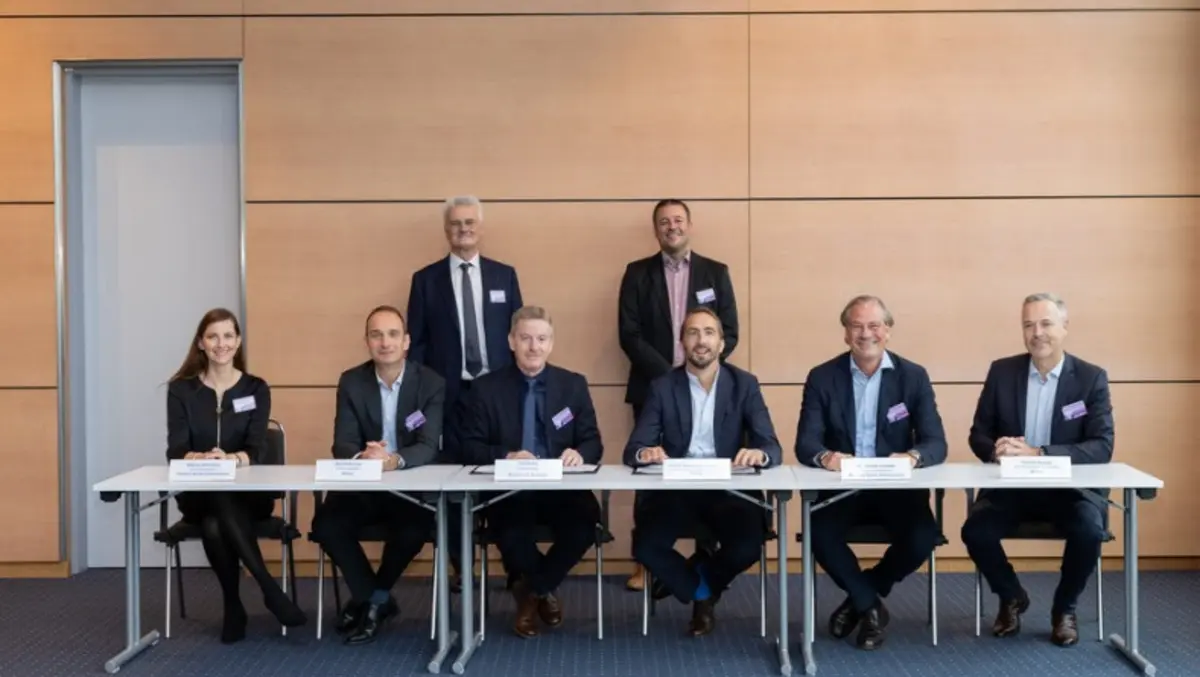
Siemens has entered into a strategic partnership with Airbus to support the decarbonisation of four major industrial sites in the United States and United Kingdom.
The collaboration is part of Airbus' broader programme to reduce its operational environmental footprint by targeting reductions in both energy consumption and CO2 emissions.
According to the framework agreement, Siemens will deliver decarbonisation solutions designed specifically for the selected Airbus sites. The joint aim is to achieve a reduction of 80 kilotonnes of CO2 equivalent abated annually from 2030.
The effort will be led by Siemens' Buildings business and will receive support from Capgemini. Capgemini will contribute with its expertise in sustainability, consulting, digitalisation, and project management, according to the companies.
Goals and measures
The programme sets targets of a 20% reduction in energy consumption and an 85% decrease in Scope 1 and 2 stationary emissions at the sites by 2030, using 2015 levels as the baseline. Siemens will develop a comprehensive decarbonisation masterplan for each site, supported by digital tools including Energy System Twins, which simulate and identify optimal decarbonisation roadmaps.
The solutions earmarked for deployment include the decarbonisation of heat production via heat pumps, energy efficiency upgrades, smart metering systems, and the on-site integration of renewable energy sources. Smart energy management systems will also be introduced to monitor and optimise energy usage at the industrial sites.
Capgemini has been tasked with carrying out initial consulting activities, establishing programme governance, and providing additional support for ongoing project management and planning. The company will also advise on the digitalisation and automation of energy monitoring and measurement systems.
Industry perspectives
"Our collaboration with Airbus is built on years of mutual trust and shared ambition. It highlights Siemens' capability to deliver smart and scalable technologies and services to reduce the carbon footprint of Airbus. At Siemens, we're committed to making the energy transition not only sustainable, but also achievable and scalable, so that Airbus and other industrial leaders can confront climate challenges while boosting operational resilience and long-term competitiveness," said Susanne Seitz, CEO of Buildings at Siemens Smart Infrastructure.
Florent Massou dit Labaquere, Executive Vice President Operations of Airbus Commercial Aircraft, also commented on the announcement. He said: "We're proud to be taking this important step toward making our operations more energy-efficient and future-ready. Collaborating with trusted partners is key in building a more resilient industrial footprint. The site-specific expertise from our Airbus colleagues in the U.K. and the U.S. combined with Siemens' technical know-how will keep us on the path toward meeting our energy use and emission reduction targets."
Implementation timeline
The initial phase of the collaboration began in mid-2025 with the creation of decarbonisation roadmaps tailored to each Airbus site. Engineering studies are intended to steer implementation, with significant infrastructure rollout scheduled from 2026 onwards. Siemens has indicated it can also operate and maintain the new systems over the long term to ensure continued efficiency and improved resilience.
Siemens and Airbus have maintained a working relationship for more than fifty years, with previous initiatives encompassing factory automation, industrial software, safety, security, and building automation technology. This latest agreement builds on a history of collaboration, focusing on supporting Airbus' sustainability objectives and minimising its operational environmental impact.