

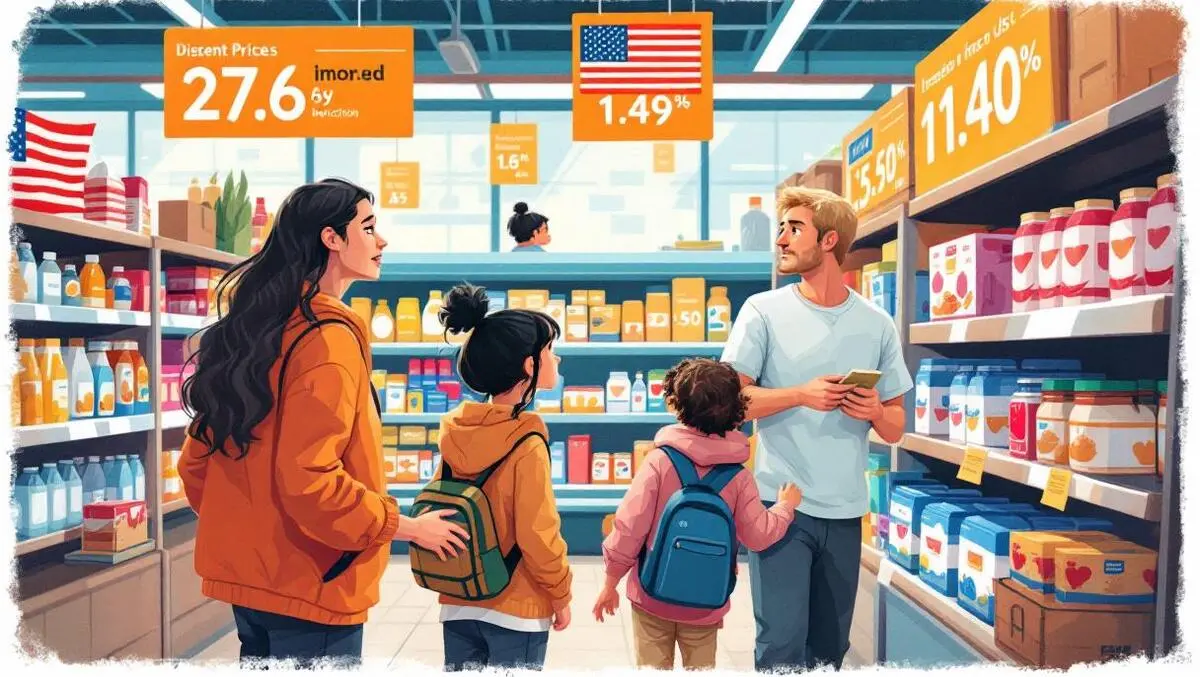
Tariffs force US consumers to choose between patriotism & price
Wed, 23rd Jul 2025
Bolt Insight has published research detailing the impact of international tariff policies on consumers in New York, Texas, California, and North Dakota, highlighting a consistent tension between patriotic buying intentions and financial realities.
Emotional and financial strain
The research, conducted by Bolt Insight using its AI-powered qualitative platform BoltChatAI, focused on awareness and behavioural responses to tariffs enacted during recent US administrations. The survey found that, across all states, consumers primarily associate tariffs with rising costs, particularly in groceries and essential goods. Many reported feeling pressured to choose between fundamental needs, such as food and medication.
"The reality is that the 'Buy American' ideal clashes with budgetary reality for most consumers. A strong, often patriotic, desire to support the U.S. economy is a common sentiment. However, this ideal is consistently overruled by the practical need to choose more affordable options, making price the ultimate decision-maker;" comments Eric Dolan, Bolt Insight's Head of North America.
"This conflict creates dissonance as consumers feel their values are pitted against their financial security - a sentiment explicitly stated by shoppers in New York, California and Texas. The common financial strain is forcing households to make significant, often painful, sacrifices on essential goods like fresh food, medication and personal care products. This trade-off directly impacts their health and well-being, turning their emotional 'Buy American' instincts into a more pragmatic household budgeting decision."
The study describes a substantial emotional toll generated by economic stress, with participants reporting anxiety, frustration, and a sense of perceived powerlessness. Respondents frequently expressed feeling like "pawns" in broader political and economic disputes, showing scepticism towards communications from both brands and the government.
Across all four states, the outcomes of rising costs include a cutback on both discretionary and essential purchases, resulting in a diminished overall quality of life. Some described resorting to lower quality goods, which had adverse effects, including health issues. As one North Dakota participant explained: "I had to make a decision last week to buy food for my household or pay for my child's medication that she needed. I chose the medication because my child really needed that medicine."
Regional differences
The research identified distinct consumer personas and attitudes in each of the surveyed states. In New York, frustration tends to have a more overtly political dimension, with consumers describing themselves as "pawns" of economic policies. Some felt obliged to buy American-made goods if financially possible, but noted that budget constraints often forced them to opt for the least expensive option. A participant from New York reported: "It has impacted my family's skin because I'm starting to notice the eczema is starting to get bad again... because Dove has gotten so pricier. Now we're using Ivory and I notice a change in our skin."
In California, the already high cost of living intensifies the hardship. Consumers are split between those who place significant value on the "Made in America" label and those for whom price is paramount. One Californian offered, "Even something as simple as a dozen eggs costing seven dollars. For upper class citizens, that's not a problem. But if you're a single parent or someone on a fixed income, you have to question every dime you spend, and you have to ask yourself, if I send seven dollars on eggs today, will I be seven dollars short on my utility bill next week? What if I need that seven dollars for gas to get to work? They can never fully understand it because they don't live it."
Texans, according to the research, are particularly sceptical about the intrinsic value of "Made in America" and are more likely to attribute price hikes to corporate actions as much as to tariffs. They prioritise price over patriotism unless perceived value justifies the cost. A Texas participant stated: "The shopping experience is less enjoyable and feels like a chore. In the grocery store recently, I had to decide on whether to buy beef or fill up my gas tank, that's frustrating and makes me not want to shop at all."
For North Dakota consumers, price sensitivity is at its most extreme, leading shoppers to prioritise affordability above all else. However, the research noted a recurring narrative of community resilience: adversity reportedly fostered a sense of local self-reliance. As one North Dakota resident said: "It makes me feel very disappointed and sad. No one should have to worry about how they're gonna feed their family. How they're gonna pay their bills to provide lights and gas and heat for their family. No one should have to worry about how am I gonna pay for my medication. You shouldn't have to work two or three jobs to be able to take care of your household. That is so unfair to you and your family."
Influence of 'Made in America'
The research concluded that, while many consumers associate American-made products with quality and prefer to buy domestically when possible, necessity and price often override these preferences. Respondents generally described buying American goods as a luxury, with most opting for international alternatives when price differences are significant. The study found that the meaning and value attached to "Made in America" varies by product category - durable goods and food are more likely to attract a domestic preference. In contrast, for many other categories, origin is a secondary consideration.
Research approach
Bolt Insight's study engaged adults aged 18 to 45 through one-on-one interviews using AI-moderated qualitative methods. The findings utilised their Dynamic Personas technology to profile consumer types across the selected states. Hakan, CEO of BoltChatAI, said, "We used Meta-Analysis to uncover the trends for this research project along with our Dynamic Personas feature that creates rich, strategic profiles with every new data point. It enables businesses to go from idea to insight in hours rather than weeks."