

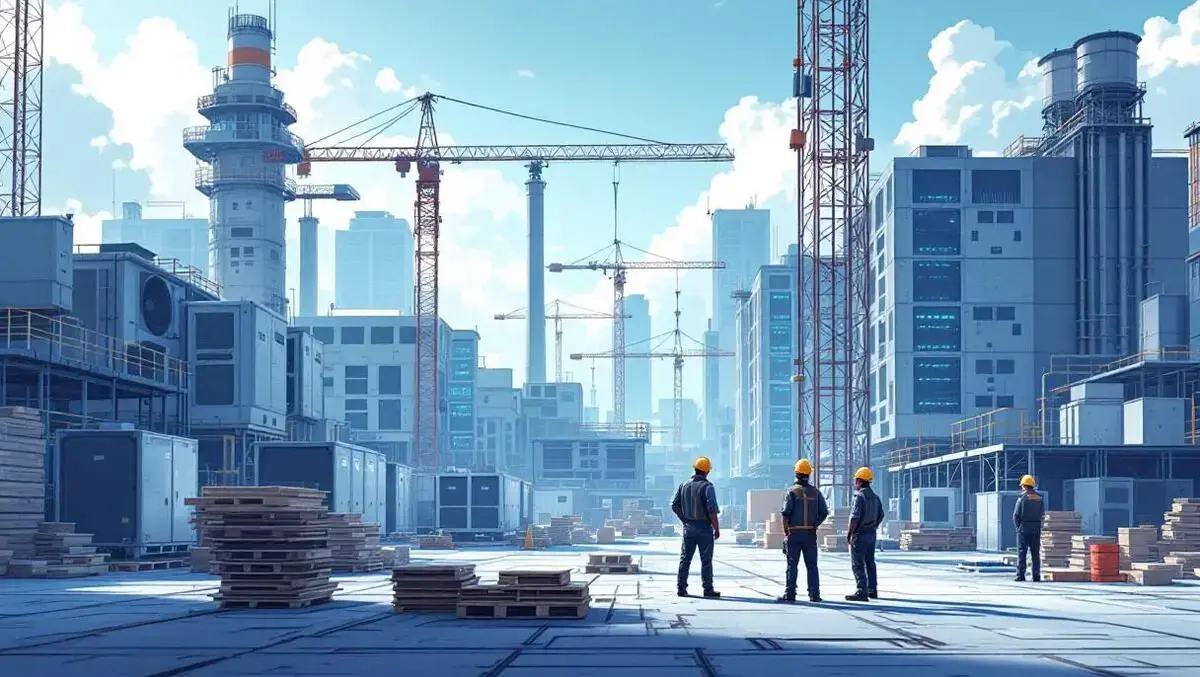
Vertiv expands Americas factories for AI data centres
Thu, 26th Mar 2026
Vertiv has announced four new or expanded manufacturing facilities in the Americas, increasing production capacity for data centre infrastructure products.
The additions include infrastructure solutions in South Carolina, rack and containment manufacturing in Pennsylvania, and an expanded power management operation in Mexicali, Mexico, as demand rises for high-density computing and artificial intelligence workloads.
Two new sites in South Carolina will focus on infrastructure technologies used in data centre deployment and are expected to increase regional capacity by about seven times once fully ramped up.
They will manufacture integrated power modules and Vertiv's SmartRun prefabricated white space infrastructure system. According to Vertiv, integrated power modules can cut deployment time by as much as 50 per cent compared with traditional builds.
SmartRun combines busway, liquid cooling piping, networking and containment into a single prefabricated system. Vertiv says it can reduce on-site deployment time by up to 85 per cent compared with traditional methods.
Pennsylvania Expansion
In Pennsylvania, Vertiv has opened an additional facility for its racks and containment business. The site will increase production of cabinets with integrated cooling systems for AI applications in high-density data centres.
The cabinets are designed to reduce the need for on-site integration by providing a more standardised, factory-built system. That approach supports repeatable deployment in data centre environments where operators want to install equipment quickly.
Mexicali Growth
In Mexicali, an expansion is expected to increase regional capacity by about 45 per cent for power conversion, conditioning and distribution products. These products will serve both high-density AI applications and more conventional electrical loads.
The changes broaden Vertiv's manufacturing footprint across the Americas as data centre operators increase investment in power, cooling and rack systems to support larger, more energy-intensive compute clusters.
Demand for this equipment has grown as operators build facilities for AI training and inference workloads, which typically require denser server configurations and put greater pressure on electrical distribution and thermal management systems than traditional enterprise computing.
The expansion is part of Vertiv's ongoing capacity planning approach, aimed at aligning manufacturing output with customer demand in regional markets. It also reflects a wider industry shift towards prefabricated and modular systems that can be installed more quickly than conventional site-built infrastructure.
Giordano Albertazzi, Chief Executive Officer of Vertiv, said the company sees AI demand as durable and is adjusting its manufacturing base accordingly.
"Vertiv sees AI as a long-term, secular trend, and we are accelerating our capacity expansions to anticipate the continued growth in demand," said Giordano Albertazzi, Chief Executive Officer, Vertiv.
"Today's announcement represents the most recent steps in our continuous capacity planning and deployment approach, as we further increase our regional and global footprint. We remain committed to our strategy of delivering future-ready, high-density solutions that enable our customers to plan confidently for multiple generations of compute ahead," Albertazzi said.
Vertiv's broader product strategy centres on linking power, cooling, IT systems and services into a single infrastructure stack for data centres. The aim is to address the operational demands created by AI systems, from electrical supply through to heat management.
Headquartered in Westerville, Ohio, Vertiv operates in more than 130 countries. Its portfolio includes power and cooling systems, IT infrastructure, and related services for data centres, communications networks, and industrial and commercial sites.
The new and expanded facilities deepen manufacturing capacity in three locations already important to Vertiv's supply chain in the Americas. South Carolina and Pennsylvania support infrastructure and rack systems production, while Mexicali serves as a base for electrical equipment.
For data centre customers, the practical effect is likely to be a larger regional supply of modular power systems, integrated cabinets and prefabricated fit-out products as operators seek to bring new capacity online faster.