

Shoreline College installs SSL consoles in new music complex
Mon, 26th Oct 2026 (Today)
Shoreline College has equipped its new music teaching complex with Solid State Logic ORIGIN consoles and SSL audio interfaces. The installation covers recording studios, production rooms and computer labs in the college's Bracken Building.
The facility includes two recording studios with live tracking rooms, three smaller production and mixing rooms, and two MIDI and computer labs. The main studio has an ORIGIN 32-channel inline analogue console, while a second studio uses an ORIGIN 16-channel model. Dozens of SSL USB interfaces are deployed across the wider teaching environment.
The move is part of Shoreline's relocation into a newly built home for its Music and Music Technology programmes. Faculty said the aim was to create two closely matched studios while giving students direct experience of analogue desk operation alongside computer-based production.
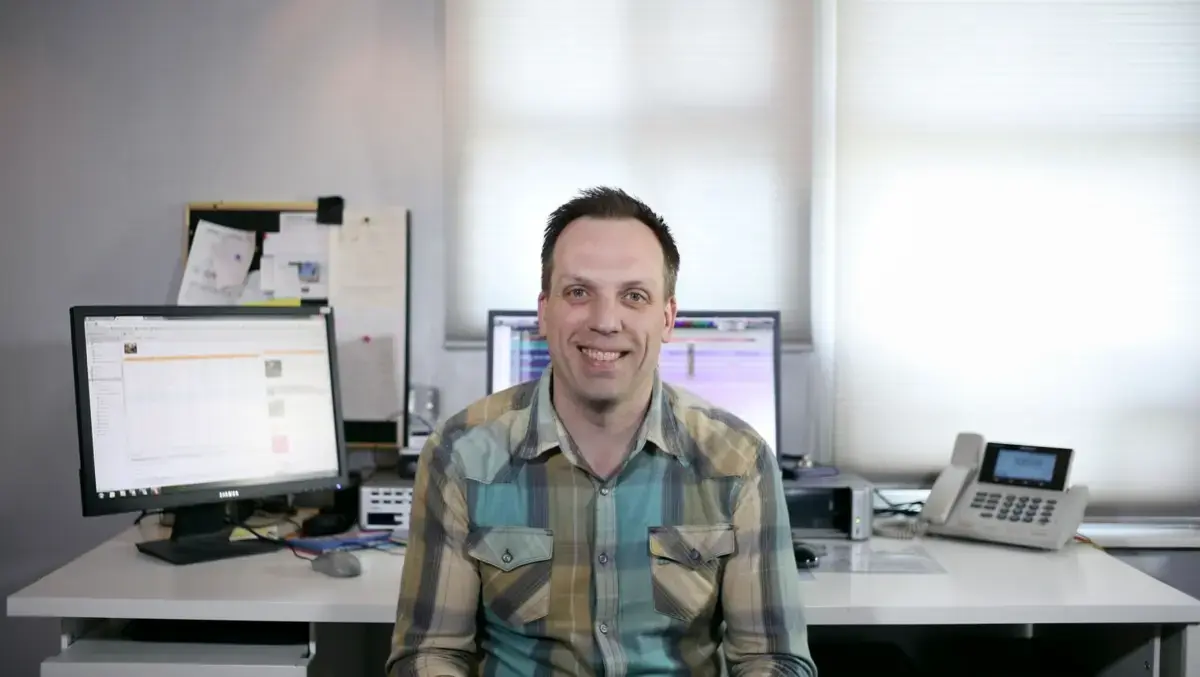
Matt Jorgensen, Music Technology faculty member at Shoreline College, said the studio design was shaped by two priorities. "We had two goals with this new space. Number one was to have two recording studios that were nearly identical, and the second was to almost take a step back from the digital world and have the consoles be purely analogue," he said.
That decision reflects a teaching approach that puts signal flow, routing and gain staging at the centre of studio education. The ORIGIN desks were chosen in part because their inline layout and dedicated controls let students work through recording and mixing tasks directly at the console rather than relying only on software.
Studio A serves as a teaching studio with space for 20 students. It includes two adjacent isolation booths and a larger tracking room that also functions as a rehearsal room for music ensembles. Studio B is smaller, with one tracking room that doubles as a rehearsal space for small groups.
A retractable door between the larger tracking room and a tiered seating area allows the space to open up for performances. The layout shows the building was designed not only for formal instruction but also for practical work involving ensembles, multitrack recording and live presentation.
Jorgensen said brand recognition also influenced the selection. "When I recorded in Seattle I spent a lot of time at Studio X, which famously has a big SSL console, and all the engineers in town have always raved about SSL," he said. "But I think having a giant SSL would have been a bit overkill for what our students are doing, so I think what drew us to the ORIGIN board was the fact that it's simple. We are an educational institution, and those consoles help us to get the students up and running as quickly as possible so they can do the things that they want to do."
That emphasis on simplicity extends to staff use as well as student teaching. Jorgensen, who teaches first-year recording classes as well as second-year music composition and MIDI production, said he was able to work quickly on the system despite being new to the desk.
"The fact that I could sit down in front of it and get a mix within five minutes, having never sat in front of this console ever before, just goes to show how simple it is. It's been great," he said.
Consistency across rooms was another objective. Identical patch bays were installed to the right of both ORIGIN consoles so students moving between the two studios can work with the same signal-routing logic.
"That way, students, who are here for two years, can seamlessly go between both studios and focus on the fundamentals of audio, signal flow and getting good mixes," he said.
Unified workflow
Beyond the studios, Shoreline has standardised much of its audio hardware around the same supplier. Each of the two 25-station MIDI and computer classrooms includes an SSL 2+ MKII USB audio interface with MIDI input and output at every student station. Instructor positions in those rooms use SSL 18 USB interfaces supporting up to 26 inputs and 28 outputs, while each of the three smaller mixing rooms also has an SSL 2+ interface.
Faculty said that uniformity reduces friction for students moving between recording, editing and composition tasks. Shared layouts and familiar controls across different rooms mean learners do not need to relearn basic operation when switching from a lab station to a production room or studio.
"It's something as simple as the +48V phantom power buttons looking the same on each channel. Having that aesthetic for all of our students to adapt to it has been great," he said. "So we went SSL all the way."
The college also linked the new equipment to changes in the kind of work students now need to do. Shoreline's teaching includes game audio, live sound and post-production projects, including assignments in which students replace dialogue, build sound design and compose music to picture. That requires movement between computer-based work, smaller overdub setups and larger tracking sessions.
Jorgensen said that model differs from the training route that once centred on preparing students for assistant engineer roles in commercial studios. "Obviously, those jobs are few and far between. I think most of us now are working in a hybrid environment," he said.
Faculty members also noticed a change in results after the move from the programme's older building. "We just had our portfolio show," Jorgensen said. "The instructors were commenting, 'We're listening to stuff from the old building and stuff recorded this quarter in the new building, and it's like night and day.' Some of that is the new control and tracking rooms, but it is mainly because of the new SSL ORIGIN consoles."
The consoles were supplied by Lift AV in Renton, Washington, while most of the SSL USB interfaces came from Vintage King. Kevin Bressler, who teaches multitrack recording on the programme, designed the studio wiring and patch bays, and Shoreline's Music Technology faculty staff carried out the integration and installation work.