

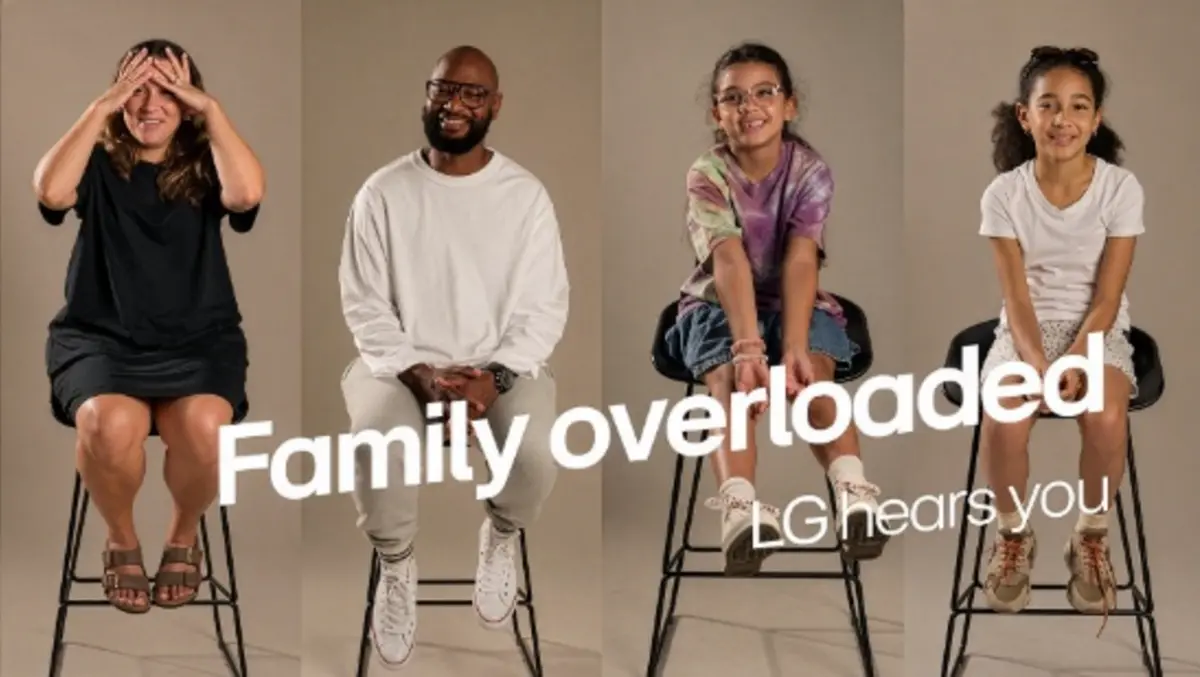
LG launches campaign to tackle domestic mental load
Wed, 19th Aug 2026
LG Electronics has launched its 2026 Life's Good campaign, focused on mental load in everyday life.
Carrying the theme "Free up your mind," it marks the fourth year of the company's global brand marketing effort.
The campaign is built around research into the strain of routine household demands and the cumulative effect of constant small decisions and interruptions. LG argues that domestic technology can take on more of that work and ease the pressure many people feel at home.
Its survey found that respondents spend an average of 87 days a year dealing with mental load. Participants reported an average of 27 interruptions during waking hours, while 51% said mental load affected their sleep and 49% said it had a negative effect on their physical health.
The research covered 3,165 respondents across the US, UK and Australia, with fieldwork carried out by Focaldata among adults aged 18 to 64. LG said the sample was designed to be nationally representative by age, gender and region in each market.
Campaign rollout
The campaign includes a hero film, a series of product-led films and an interactive tool intended to help users assess their own level of mental load. The product-focused material features LG WashTower, LG Styler, LG OLED and LG DUALCOOL.
According to LG, the hero film follows a family setting aside the pressures of day-to-day domestic life for an evening. The wider campaign presents household products as a way to handle repetitive tasks in the background, leaving more time for personal activities and family interaction.
The research also pointed to a gap between how people spend their time and what they value when free from routine responsibilities. Rather than prioritising productivity, respondents spoke about reading, spending unplanned time with family and friends, and enjoying moments without day-to-day obligations.
Home pressures
Unpaid responsibilities in the home were a larger contributor to mental load than paid work, according to the findings. Nearly three quarters of respondents, or 73%, said household technology could reduce that burden if it handled routine tasks proactively.
The figures reflect a broader push by consumer technology brands to position connected appliances and artificial intelligence tools as practical aids in domestic life, rather than purely entertainment or convenience products. For appliance makers, that creates a commercial opening to tie hardware more closely to questions of wellbeing and time management.
At the same time, the survey data are based on self-reported experiences rather than medical assessment. LG said the findings reflect respondents' perceptions and are not clinical or scientific evidence of health benefits.
Kim Hyo-eun, Head of LG's Brand Management Division, outlined the company's view of the role of consumer technology in that context.
"As technology becomes part of everyday life, it should quietly help people reclaim their time and attention to enrich their lives," said Kim Hyo-eun, Head of LG's Brand Management Division at LG. "Now in its fourth year, the Life's Good campaign continues to showcase how innovation makes Life's Good and brings the brand promise to life."
LG linked the new campaign to earlier instalments in the same series, including We don't make life good, you do and Less artificial. More human. This year's message shifts the emphasis towards the cognitive strain of domestic organisation and the possibility of reducing it through automated support.
Expert view
LG also cited an external comment from psychiatrist Dr Judith Joseph to reinforce the campaign's theme of emotional exhaustion and household pressures.
"Through my research on high-functioning depression, I've found that the constant weight of unshared domestic tasks is a silent trigger for emotional exhaustion," said Dr Judith Joseph, a board-certified psychiatrist and a 2026 TIME100 Creator. "LG's focus on reducing mental load targets the root of this modern crisis. True well-being in the AI era means easing these invisible burdens with intelligent technology, freeing up the psychological capital required to reclaim joy, spontaneity and human connection."
The campaign forms part of LG's wider effort to connect its consumer products to its artificial intelligence strategy. Here, the company presents AI less as a standalone feature and more as a way to remove small recurring tasks that can build up across daily life.
That framing comes as electronics groups compete to show practical uses for AI in homes, especially in major appliance categories where replacement cycles are long and product differentiation can be difficult. By focusing on routine domestic pressure, LG is seeking to tie that technology pitch to an experience many households say they recognise: the sense that everyday life is crowded by invisible but persistent demands.
Nearly three in four respondents believe household technology could help reduce mental load, with the strongest demand for solutions that handle routine tasks without constant attention.